
Buying your first 360 photo booth
A buying guide from someone with no rig to sell. What to check before you pay, what matters less than the marketing says, and what to ask an overseas seller.
Almost every guide to buying a 360 photo booth is published by someone who
sells them. That does not make them wrong, but it does shape what they
emphasise, and it explains why so much of the advice is about the platform.
We make the software, not the hardware. There is no rig at the end of this
article. That means we can be straight about the part sellers tend to skip:
most of what decides whether your booth looks good and earns money is not
the platform you are choosing between.
Here is what to actually check.
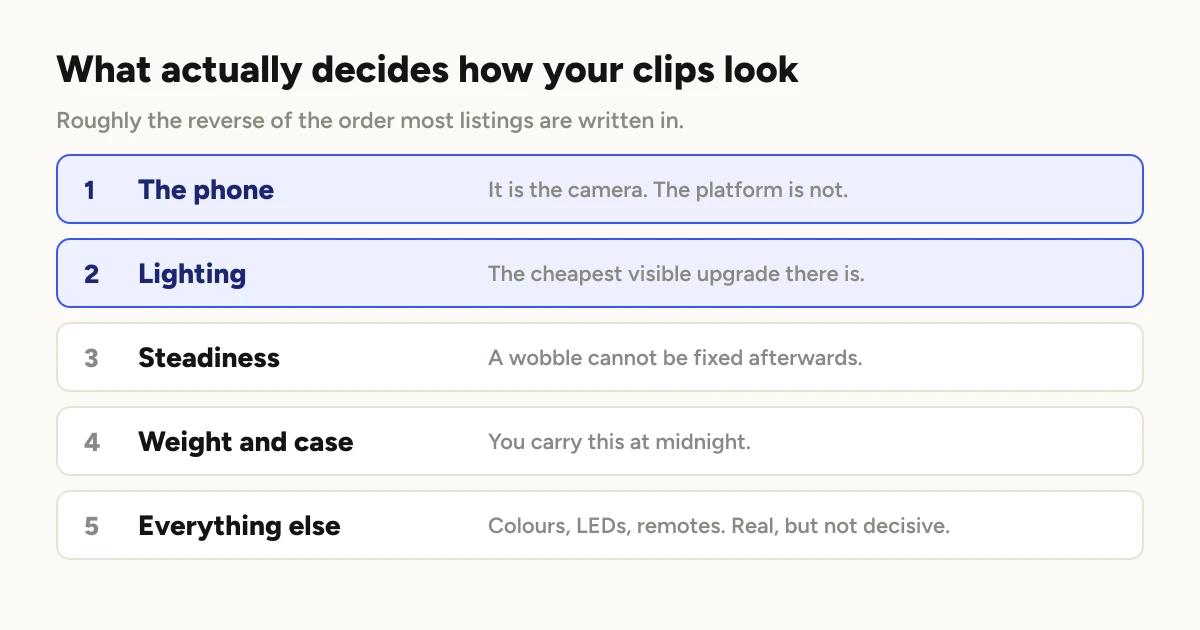
What matters most when buying a 360 booth?
1. The phone you put on it. The platform holds a camera. It is not the
camera. Image quality, stabilisation and how well low light is handled all
come from the phone, so a mid range platform with a recent phone beats an
expensive platform with an old one. If your budget is fixed, this is the
first place to spend, not the last.
2. Lighting. The biggest visible difference between amateur and
professional 360 clips, and the cheapest to fix. Venues are darker than they
look and a ring light on the arm is doing more for your footage than another
few hundred on the platform would. There is a longer version of this in
lighting a 360 booth, including why an arm
light beats a stand.
3. Build quality and steadiness. The arm's actual job is to move at a
constant speed without wobbling. A wobble shows up in every clip and cannot
be fixed afterwards. This is worth checking in person or on video before you
pay.
4. Weight and how it packs. You are carrying this, often up stairs,
often at midnight. A heavy rig with an awkward case costs you at every single
event for as long as you own it.
5. Everything else. Colours, LED patterns and remote controls are real
features, but they are not the ones that decide whether you get rebooked.
What should you check before you pay?
Does your phone actually fit the mount, with its case on? This catches
people constantly. Ask for the mount's maximum width, and measure your phone.
What is the platform's weight limit, and how many people fit? Two or
three at once looks better than six, but the limit matters for safety, and
venues will ask.
How does it travel? Ask what case it comes with, whether it is included,
and what the packed dimensions are. Then check it fits in your car.
What is the power requirement, and what plug does it ship with?
What is the warranty, and who honours it? The answer changes a lot
depending on where the seller is.
Can you see it running before you buy? A video of the actual unit, not a
marketing render. Watch the arm at the point where it changes direction,
which is where a weak motor shows itself.
What is the return policy on a heavy item shipped internationally? If the
answer is vague, treat that as the answer.
What if you are buying from overseas?
A lot of this market ships from a small number of manufacturers, so buying
across a border is normal rather than exotic. It just changes the arithmetic.
Freight is not a rounding error on something this size and weight, and it
is often quoted separately from the listed price. Get it in writing before
you commit.
Import duty and tax may be charged on arrival. Find out who pays.
The plug and the voltage need to match your country. Ask, rather than
assume an adapter will do.
Support is a time zone away. If something breaks the week before a
wedding, the practical question is not whether there is a warranty. It is how
long a replacement part takes to arrive.
A local seller costs more and is sometimes worth it, specifically because
of those last two points. That is a genuine trade rather than an obvious
answer.
New or used?
Used 360 booths come up regularly, usually from operators leaving the
business. It can be good value, with two cautions.
Ask why it is being sold, and ask how many events it has done. Motors
and bearings wear.
Check that the case and mount are included. Replacing either separately
can undo the saving.
And test the arm through a full rotation before money changes hands. A wobble
that develops halfway through a turn will not show up in a static photo.
Is the software a separate decision?
Sellers often bundle or recommend an app. You are not obliged to use it, and
the software is worth choosing on its own terms, because it is the thing you
will actually touch all night.
It is also the cheaper decision to get wrong. Changing apps costs you an
afternoon. Changing platforms costs you freight both ways.
Most apps in this category, Logibooth included, let you run a
real event before paying anything, so you can test the part you interact with
most before you commit to the part you cannot return.
Worth checking in any app you try: how clips reach guests when the venue wifi
is bad, whether your branding goes on the clips, and how it behaves when the
booth is busy. That last one is
less about the phone than people assume.
Before your first paid event
Set the whole thing up at home first, and time it. Setup and pack down at
a venue with a crowd watching is not when you want to discover a missing
bracket.
Do a full run with your real settings, the intro and overlay you plan to
use and the effect you have chosen. Then watch the output on a phone, which
is where guests will see it.
Run an unpaid event if you can. A friend's party is a cheap place to find
out what you forgot.
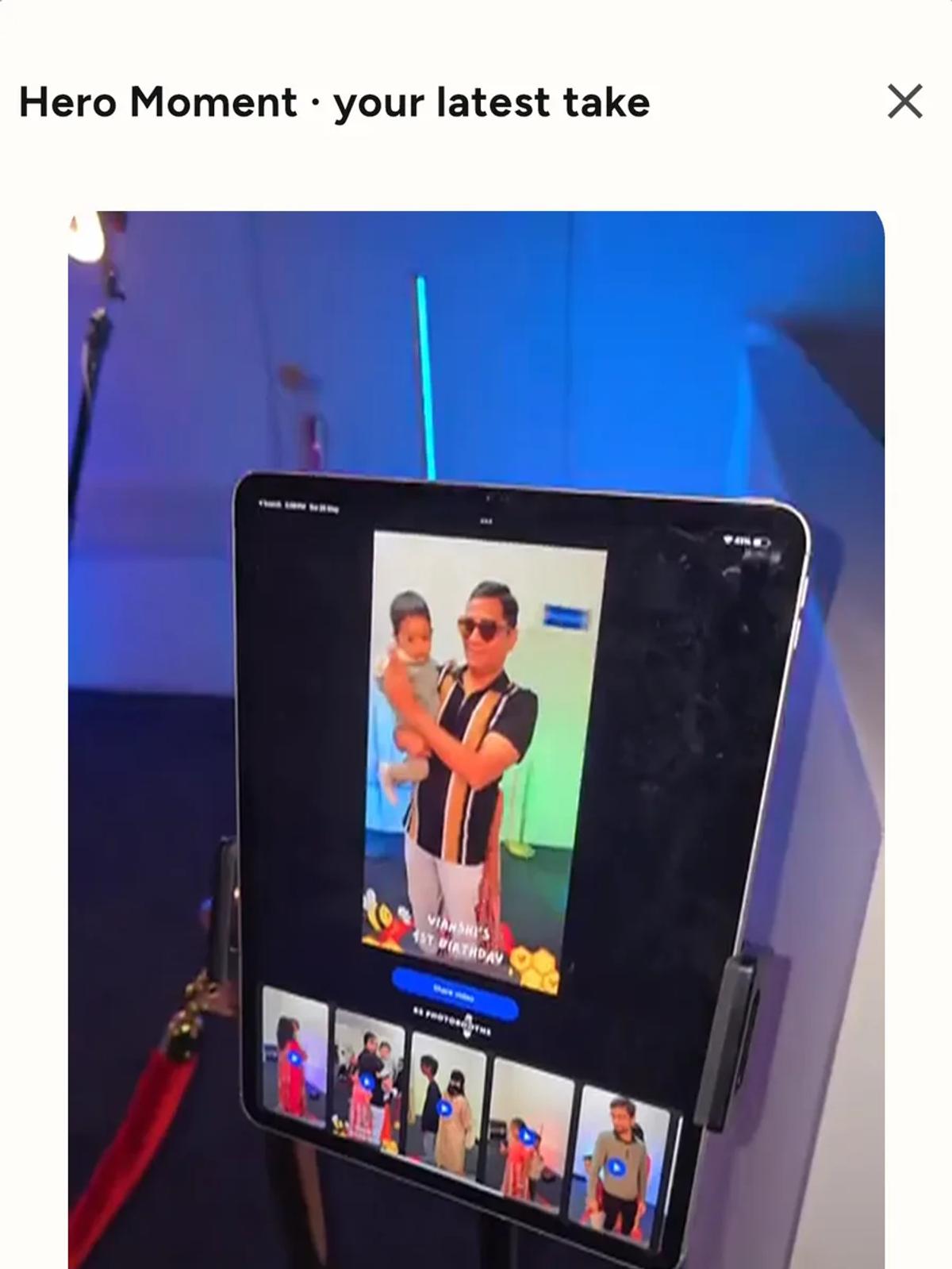
Launching your first project
walks through the software side of that, and
managing devices covers
adding the phone you will actually run on.
The short version
Buy the sturdiest platform you can carry, put the best phone you can on it,
light it properly, and spend nothing extra on features that do not survive
contact with a real event.
If you are still working out the total, what a 360 photo booth actually
costs breaks down the parts that never
appear in a listing. If you want to understand what you are buying before you
choose one, how a 360 photo booth works
covers the mechanics.
Keep reading
What is a 360 video booth?
Two names, mostly one product. A 360 video booth and a 360 photo booth are usually the same machine, but a plain video booth is something else entirely. Here is how to tell what you are looking at.
Read more →
Snap360 alternatives, compared
Snap360 is a capable 360 booth app with an unusually generous free tier. The differences worth knowing are cloud storage, how many devices you can run, and what offline actually means.
Read more →
Your first 360 booth event: what actually happens
Most advice for new operators stops at the sale, because most of it is written by people selling rigs. This is the part after that, in the order it actually happens.
Read more →